
Bone Regeneration and MBVs
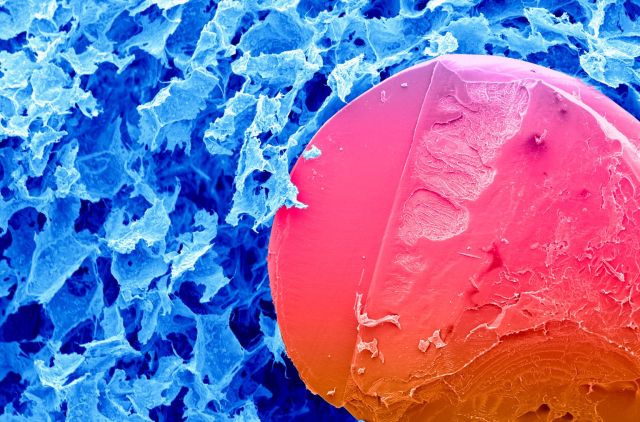
Bone repair, especially large-scale repair requiring bone grafting (trauma, cleft palate), is challenging due to multiple cell types required to work together in a spatiotemporal manner. Promising strategies for bone repair involve the use of biomaterials; however, these are often met with challenges when repairing large defect spaces. Balancing the material to provide host bone repair and the biomolecular signals to direct cell fate towards repair remains a problem. Extracellular vesicles (EV) are stable sources of signaling cargo resilient to 3D-printing, making them ideal signals to be captured within biomaterials for bone repair. A newly discovered type of EV has been found residing in the extracellular matrix, termed matrix-bound nanovesicles (MBVs). As the bone microenvironment is a complex signaling network of blood vessel formation, bone formation, bone resorption, and the immune response, we incorporate this complexity into a biomaterial platform with diverse populations of EV and MBVs to guide host bone repair. Our goal in this space is to understand how MBVs are different from other EVs, how MBVs embed in the extracellular matrix, how MBVs are produced, how MBVs influence extracellular matrix formation, and how we can combine these with biomaterials to advance bone repair.
Related Publications:
- R. dos Reis Marques, M. Sheth, A. Salami, S. Kongsomros, L. Esfandiari, M. Dewey. Defining characteristics of mesenchymal stem cell-derived matrix-bound nanovesicles compared to conditioned culture medium extracellular vesicles. BioRxiv, doi: 10.64898/2026.05.05.722048. [pre-print]
- Kolesov AV, Reitz N, M. Dewey, Hisey CL. Migrasomes, Matrix-Bound Nanovesicles, and More: Messengers in the Matrix. Proteomics. 2025 Oct 14:e70056. doi: 10.1002/pmic.70056. Epub ahead of print. PMID: 41088859.
